|
Raman Research Institute’s PRATUSH project: space-borne radiometer
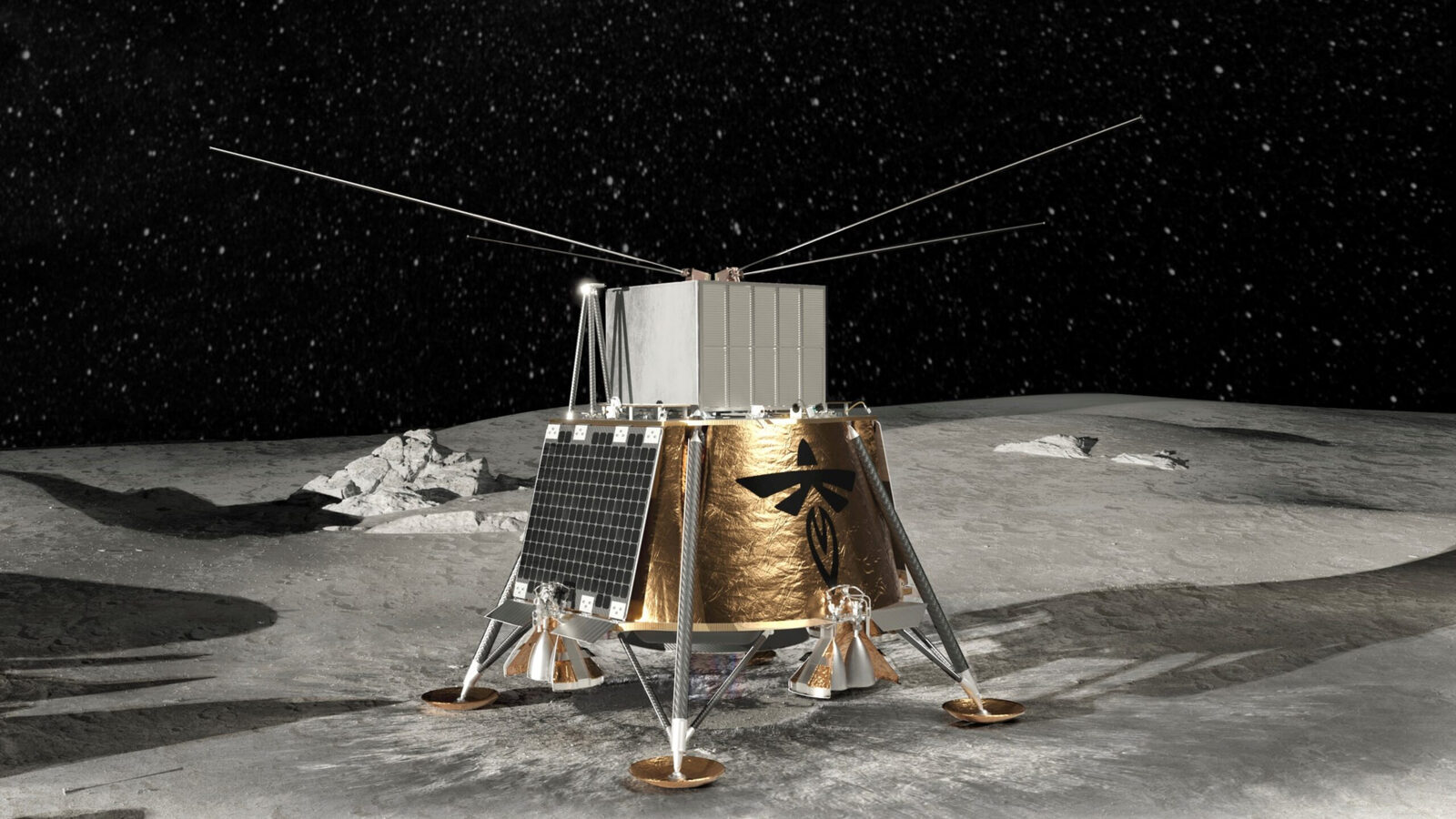
Scientists are preparing to deploy miniature space observatories into lunar orbit, including the UK-led CosmoCube mission and India’s proposed PRATUSH project. These missions collect ultra-low frequency radio signals from neutral atomic hydrogen by using the Moon’s far side as a radio-quiet zone.
PRATUSH project and CosmoCube mission (space-borne radiometer):
| Dimension | Key Details |
|---|---|
| Target signal origin | The target signal is emitted by neutral atomic hydrogen, the most abundant element in the early universe. |
| Hyperfine transition | The signal originates from a “spin-flip” transition in ground-state neutral hydrogen atoms. |
| Original emission | The signal is originally emitted at a wavelength of 21 cm (1420 MHz). |
| Cosmological redshift and observed frequencies | Over about 13.5 billion years, the expansion of the universe stretches the signal into ultra-low radio frequencies of 10 to 100 MHz. |
| Scientific benchmark use | The signal serves as a cosmic “thermometer” and timeline to map: Cosmic Dark Ages, Cosmic Dawn, and Hubble tension and dark matter related observations. |
| Cosmic Dark Ages | Cosmic Dark Ages comprise the period of about 380,000 to 150 million years post-Big Bang, before the first stars ignite. |
| Cosmic Dawn | Cosmic Dawn comprises the phase when the first stars and galaxies form and reionize neutral hydrogen gas. |
| Hubble tension and dark matter use-case | The signal provides observational data to resolve discrepancies in the universe’s expansion rate and to test dark matter-baryon interactions. |
| Far side of the Moon | The far side of the Moon is the most pristine, radio-quiet environment in the inner Solar System. |
| Earth noise shielding | The Moon acts as a physical shield against human-made radio-frequency interference such as FM radio, satellite networks, and aircraft communications. |
| Ionospheric bypass constraint | Ground-based radio telescopes struggle to detect these low-frequency signals because Earth’s ionosphere refracts and blocks radio waves below 30 MHz. |
| Observation window per lunar orbit | During a typical 2-hour lunar orbit, a satellite gets about 40 minutes of absolute radio silence while positioned behind the lunar far side. |
| CosmoCube lead organisation | CosmoCube is led by a UK-led international consortium comprising the University of Cambridge and STFC RAL Space. |
| PRATUSH lead organisation | PRATUSH is led by Raman Research Institute (RRI), Bengaluru, supported by ISRO and DST. |
| CosmoCube form factor | CosmoCube comprises a suitcase-sized small satellite (CubeSat class). |
| PRATUSH form factor | PRATUSH comprises a space-borne radio telescope payload. |
| Target orbit | CosmoCube applies to lunar orbit for collecting data behind the far side, and PRATUSH applies to high Earth orbit or lunar orbit. |
| Instrumentation | CosmoCube comprises an ultra-sensitive RF-System-on-Chip (RFSoC) radiometer and deployable antenna, and PRATUSH comprises a precision wideband radiometer designed for sub-microvolt cosmological signals. |