|
Union Budget 2026-27 Flags Sandalwood as Cultural Heritage Species
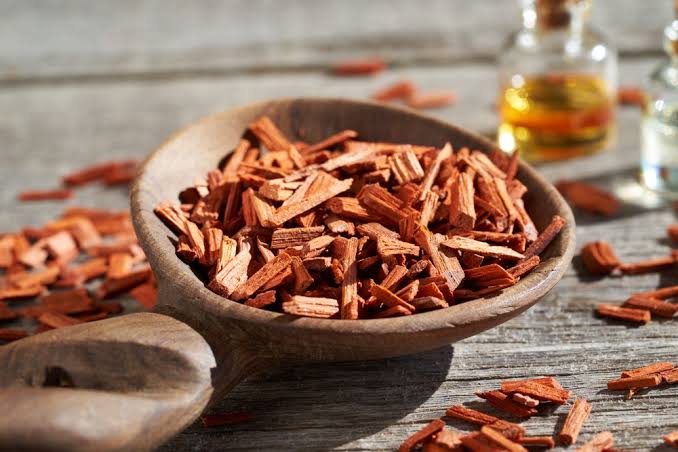
The Union Budget 2026-27 flags sandalwood (Santalum album) as an important part of India’s social and cultural heritage.
Sandalwood and Sandalwood Development Committee:
| Dimension | Key Details |
|---|---|
| Biological nature | Biological nature comprises a hemi-root parasite, dependent on host plants for water and nutrients. |
| Host plant selection | Host plant selection regulates growth outcomes: unsuitable host plants, stunted growth, chlorosis, and increased mortality. |
| Examples of unsuitable/impactful hosts | Examples comprise: Malabar neem, dense shade that suppresses sandalwood growth; Melia trees, harvesting for plywood that reduces sandalwood vigour. |
| Climate-smart traits | Climate-smart traits comprise salinity tolerance, drought tolerance, hardiness, a light crown, minimal nutrient requirement, and adaptation to a range of soil types. |
| Agroforestry integration | Agroforestry integration comprises suitability for block plantations, boundary plantings, and mixed cropping systems. |
| Compatible host species | Compatible host species comprise gooseberry, mango, custard apple, and legumes such as red gram. |
| Geographical spread | Geographical spread comprises cultivation beyond traditional Southern belts to Telangana, Gujarat, Madhya Pradesh, Andhra Pradesh, and parts of northern India. |
| Sandalwood Development Committee | The Sandalwood Development Committee is established under the Economic Advisory Council to the Prime Minister and the Union government think tank NITI Aayog. |
| Chairperson | The committee is chaired by the Finance Secretary. |
| Committee members | Members comprise representatives from the Ministry of Environment, Forests & Climate Change, Ministry of Agriculture & Farmers Welfare, Ministry of Commerce, Ministry of Ayush, and the National Medicinal Plants Board of the Government of India. |
| Other institutional representation | Representation comprises the Institute of Wood Science & Technology, Bengaluru, and the Forest College & Research Institute of the Tamil Nadu Agriculture University. |